 Let's talk about something that hurts us as women: our obsession with appearance. It is so insidious that when someone beautiful is cheated on, we can't understand it. We wonder how it could happen to her. We completely bypass the fact that cheating reflects solely on the cheater's character and has nothing to do with the partner’s looks!
We are bombarded with messages that tell us we're not good enough. Maybe we inherited our mothers' body image struggles or absorbed opinions from social media. We are made to feel like we need to be a certain size or have perfect features to be worthy. Here's the thing: placing emphasis on appearance takes energy away from what really matters and I don’t see men wasting precious time and energy agonizing over their outfits or picking apart each other's bodies! Imagine the energy we could free up if we stopped obsessing over looks. People are drawn to our energy, not the size of our jeans. It's the things we do and how we make people feel that leave a lasting impression. Our worth has absolutely nothing to do with our looks! Why would it? Comparisons Do you ever find yourself in that state of mind where your body just doesn't feel good enough, and you're comparing yourself to other women? We’ve all been there. The truth is, we're not even comparing ourselves to the ‘right’ people. The majority of women we see in the media and on TV have small body frames and the ability to spend a large percentage of their time maintaining their appearance! I had an epiphany as a teenager: the women in real life look different from the women in magazines, and these ‘imperfect’ beings around me had loving partners and happy lives regardless of not looking like supermodels. Fancy that! It took a while, but I've come to the point where I don't really care what I look like - I care a lot more about my health. My husband is attracted to me, and I’m not interested in what other men think. As for women: if they want to judge my body, that says more about how they have been taught to treat themselves and other women than it does about me! Here's the thing: you're amazing just as you are, and your body deserves to be celebrated, not punished for not being something else. Negative Self-Talk The more that criticizing voice inside your head talks, the bigger the urge to comfort yourself with food! Negative self-talk can also zap your energy in general and make you less motivated to exercise. One way to mute it is to shift focus to the things you do right, and the progress you're making. For example, if you're able to plan your meals or check if you’re thirsty rather than hungry, then you're making progress! Celebrate these wins because they will ultimately lead to reaching your weight loss goals. If you only focus on the scale, you're missing out on the opportunity to support yourself in making the changes you need. Celebrate mistakes too because they show you what not to do and thus, get you further toward your goal! Something I've learned in recent years is that if I want to change behaviors, I MUST find something positive about what I've achieved so far, however small. I’ve been challenged lately with having to completely change my diet because I'm now sensitive to a whole bunch of foods. To prevent this from being an overwhelming project, I've had to change things one step at a time, keep track of the changes I make, and celebrate every little step. Punishing Workouts Using exercise as some sort of punishment for eating wrong is just another way to treat yourself like you are not good enough. We’re constantly being told about calorie burning and pushing our limits, but what if that's not the right way to go? Think about it: our bodies are incredible. They carry us through everything we want or need to do, and they deserve appreciation, not punishment for the occasional pizza slice. I'm careful with my workouts. That doesn't mean I don't work out hard, and it doesn't mean I ignore what I need to work on or avoid things I don't like. However, I don't ignore my body’s signals; I don't push through pain. If something doesn't work for me, I alter it or cut it out. I have no desire to treat exercise as some kind of warped self-harm activity! Workouts can be a way to show our bodies love when we choose exercises that help us handle stress, age comfortably, and actually promote well-being. It is possible to ditch the "go hard or go home" mentality and use exercise as a way to tune into your body. This is where good exercise comes in – not the kind that leaves you drained. Let’s say goodbye to the exhausting cycle of comparison, negative self-talk and punishing workouts. It’s time to prioritize our health, our comfort and our self esteem. You are worthy just as you are 💚 Would you like to work out in a way that focuses on building a you that you love, that makes you feel strong, confident, and awesome instead of critical of yourself? Book a free consultation or free workout.  Ladies! We deserve workouts built for OUR bodies & goals, not shrunk-down versions of men's routines! Today, I’m breaking down some of the elements that make a woman's workout different.
We need joint stability work Women tend to have naturally looser joints compared to men. This can mean stability becomes a crucial factor in pain-free exercise. I love incorporating anaerobic exercises like bear crawls and bodyweight squats. These exercises not only elevate your heart rate but also challenge your balance and core stability, teaching your joints to stay stable during movement. Additionally, stable joints prevent the wrong muscle groups from overworking and creating tension or headaches caused by poor posture. We have to figure out what works best for OUR hormones On hormonal birth control, our hormones may be more regulated throughout the month. Without, we may notice some dramatic changes. For example, a significant energy drop right after ovulation or less coordination premenstrually. Some love to workout hard to get all the stress out, whereas others are exhausted a few days before their period! There's a lot of conflicting advice out there, but you know your body best. I urge you to track your cycle and tailor your workouts accordingly. For peri and postmenopausal women, current medical opinion (not from the Dark Ages!) suggests that estrogen supplementation can be beneficial to help maintain muscle mass, bone strength, cognitive health, and more. AND IS NO LONGER THOUGHT TO CAUSE CANCER. It is harder to maintain fitness after menopause but with consistency, we do see improvements. We strength train for different reasons Muscle mass has incredible effects on the body. The more muscle you have, the more calories you burn each day, thanks to its increased metabolic activity. Strength training is the most significant way to build strong bones, much more so than activities like walking. Muscles also play a vital role in proper body mechanics. Strong muscles promote good posture, preventing you from slouching, and support your joints, reducing pain and the risk of injuries. Women naturally have lower testosterone levels, making it more challenging to build significant muscle mass. However, that doesn't mean it's impossible! If getting big is your goal, it will require dedication and specific nutrition. And for everyone else, there's no need to worry that lifting weights will turn you into a bodybuilder. Think JLo and Janet Jackson – strong, toned physiques that celebrate the female form! And finally... We've explored the science behind women focused workouts. unpacking how to burn calories, avoid injury, and stand tall. We touched on the current recommendation for estrogen supplementation for peri and postmenopausal women, and emphasized the importance of tuning into your body's needs throughout your menstrual cycle. But here's the real question: Are you ready to ditch the generic routine and trade it for a fitness plan that focuses on what matters to you? One that takes into account hormonal fluctuations, prioritizes joint stabilization, and leaves you feeling strong and confident? Book a free, one-on-one consultation today! to discuss your fitness goals, current exercise routine, and any questions you have. And you can schedule a free workout too!  Can't find motivation to exercise?
In this free mini course I will take you through a step-by-step process to get motivated to stick to a consistent exercise routine so you can stay FIT, VIBRANT & HEALTHY in your BEST years. Create your own motivation plan and get the full series here. Pull factors draw us TOWARDS something we desire. Your pull factors might involve wanting to keep your body strong to enjoy pastimes like dancing, exploring the world, playing with your grand kids or building a strong foundation for good health. "Exercise has given me energy, strength, and confidence that I never knew I had. I feel better in my body and mind than I ever have before." Perhaps, it's the mind-body connection that draws you in. The promise of stable moods, sharper thinking, and a confidence boost from reaching your goals might be on your radar. "I find working out to be a great way to relieve stress and clear my head." Maybe you just want to sleep well and have more energy while maintaining your desired weight, and that's your reason to move. “Exercise has helped me manage my weight, reduce stress levels, and improve my sleep." Push factors are what we want to move AWAY from so they may include things we are scared will happen if we don't workout. "I started exercising in my 50s, not to lose weight or look a certain way, but to take care of my health. I knew that as I aged, my risk of developing chronic diseases like diabetes and heart disease would increase. I wanted to do everything I could to prevent that from happening." The things we want to avoid by exercising are generally related to declining physical/mental health or physical discomfort. Or we want to avoid looking overweight or too thin. No one wants to dwell on these (so I won't), but the good news is that knowing you are doing something to lessen the risk can feel really empowering. "My diabetes diagnosis was a wake-up call. I knew I had to take control of my health for myself and my family. So, I took a deep breath and got a personal trainer." 🤜 Which negative outcomes do you want to avoid by exercising? 🤛 What are you excited to achieve by working out? Note your answers and create your motivation plan here. I'm sure you can see how push and pull factors kick start your desire to get fit. And hopefully you have found some deep-seated motivations to use as fuel to start working out. In part 2, we'll explore using movement to achieve a big life goal so that you can get excited about each workout. If you're eager to jump-start your fitness journey with personalized 1 on 1 workouts, don't hesitate to book a free consultation with me.  In Part 1, of this 3 part series we delved into your reasons for exercise in order to make it more meaningful to you. Now it's time to ignite a spark that fuels your drive to workout.
What's Your Big Exciting Goal? An exciting goal can be a powerful motivator. Think about something you've always wanted to achieve that fitness can help you with. Here are some examples: 👣 Travel to a new place and explore it on foot 👣 Feel confident and beautiful in a swimsuit 👣 Run a 5K or 10K race 👣 Hike a challenging trail 👣 Play with your grandchildren without getting tired 👣 Master a challenging yoga pose You can use your goal to get fired up to exercise by creating a statement like this: I am excited to start working out so that I can run a 5K race with my daughter. Write your own statement and create a motivation plan here. In part 3, we'll learn some strategies to overcome procrastination so that you can make workouts a consistent part of your life. If you're eager to jump-start your fitness journey with personalized 1 on 1 workouts, don't hesitate to book a free consultation with me.  In part 1 of this 3 part series, we connected your "get fit" goal to something deeper to make it more meaningful to you. In part 2, we explored using exercise as a stepping stone to achieve an exciting life goal.
Today, we're tackling procrastination in fitness by identifying obstacles and solutions. Here are some challenges you might encounter, and how to navigate them so you can start building permanent exercise habits: Getting too comfortable You KNOW what will happen if you sit down after work. The lure of the couch post-work will be your downfall! Solution - 👣 If you have to exercise after work, get it booked in - for before you head home - with a trainer or a friend (or a class at the gym). Lack of time It's rarely actually lack of time that's the problem. Time management is a non-negotiable if you want to stick to a fitness routine. I understand some of you have a huge amount on your plate and have to get seriously creative to fit movement into your day. I have faith in you. Solution - 👣 Get workouts booked in first and schedule your other activities around them. Gym intimidation You don't need to join a gym to get fit. A lot of us, myself included, don't want to go to the gym because of other people's sweat, feeling like you have to act or dress a certain way, unsolicited advice and at worst misogyny. Solution - 👣 If the gym isn't your scene, explore alternative ways to stay fit like home workouts or outdoor activities (or go with a friend). Unsure where to start The gulf between exercising and not exercising, in terms of health and feeling good is HUGE, so just do something. The key is starting small with achievable exercise goals. Solution - 👣 Pick one simple and effective exercise goal and focus on proper form. Build from there! Injury worries The complex exercises you see on social media aren't required for fitness. They just make for engaging content. Solution - 👣 Prioritize safety. Learn core exercises for beginners, with proper form, before venturing into advanced moves. List your own obstacles and solutions here. In parts 1 and 2, we delved deep into your hidden motivations for exercise, identified the push and pull factors that truly drive you, and ignited your passion with a goal that sparks joy! Now, you also have a strategy to overcome potential roadblocks and excuses, to build a consistent workout routine. Armed with your personalized statement. you have everything you need to stay motivated and meet challenges that come your way! If you're eager to jump-start your fitness journey with 1 on 1 (or 1 on 2) workouts, try my personalized training programs designed specifically for women in their 50s and beyond. I can help you achieve your big exciting goal - while obtaining all the benefits you crave – and avoiding the downsides of not exercising. Schedule a free consultation with me.  This week I'm excited to share with you 7 simple yet effective habits you can start this week to feel and look younger!
Cheers to Youthfulness: Less Booze, Better Looks! Let's start with some tough love. We all love a good glass of wine, but let's be real - it's not doing us any favors in the 'looking and feeling young' department (sorry!). Even if you're splurging on the fancy stuff it's still a toxin and, as the Gateway Foundation so graciously puts it, "Drinking makes your face look puffy, tired, and older than your actual age"!
Play Smart: Game On for Mental Sharpness Throw some brain training into your daily routine. But don't waste hours on games you're already good at. For example, I'm dyslexic, so I kick off my day with 5-10 minutes of WORD puzzles to wake up the language part of my brain.
Age-Defying Eats: Fruits and Vegetables Combat Aging Inflammation Loading up on fruits and vegetables floods your body with antioxidants, vitamins, and minerals - an essential anti aging strategy. This obvious, yet frequently overlooked, habit tackles inflammation (aka the troublemaker behind aging).
H2O Glow-Up: Skin's Best Friend Water is your BFF. Drinking a minimum of 64 fl oz (8 glasses) a day is a simple way to improve skin elasticity, and promote a youthful glow. Aim for at least 8 glasses a day - to keep your skin plumped up and toxins out.
Keep Going, Keep Mobile, Stay Bendy, Not Stiff! When you can move freely you’ll look and feel younger. From as young as 30 (!) we can start to stiffen up, especially if we don’t exercise or if we workout in a repetitive way (runners and cyclists I’m looking at you). I include mobility drills for each major joint as part of my client’s warm ups so that they can keep on top of any declining range of motion.
Slumber Elixir: Revitalize with Zzz's Clear skin and a refreshed body, anyone? Quality sleep not only revitalizes your body but also contributes to smoother, clearer skin. Do your sums to make sure you give yourself enough time with no distractions to fall asleep and get the hours you need.
Muscle Magic: Keeping Your Body Naturally Perky! Want to keep that youthful toned look? It's all about muscle. However, it tends to vanish as time goes on. The antidote? Resistance training and getting enough protein. Whether you want to workout with me, join a class, or find some routines on YouTube, hang on to that muscle!
We've looked at ways to revitalize your life with 7 healthy aging strategies: being mindful of alcohol consumption to engaging in daily brain training, increasing fruit and veg intake, staying hydrated, staying mobile, prioritizing quality sleep, and maintaining muscle mass. These holistic well-being tips pave the way for age-defying wellness and youthful vitality! Want to get content like this straight to your inbox every Friday? Sign up HERE  Practical & Mindset Tips To Reclaim Your Sleep
Did you catch last week's deep dive into the amazing benefits of sleep? From memory boosters to mood lifters, it's a game-changer for our bodies and minds! Now, it's time to turn those insights into action. Keep reading for practical tips on achieving a better night's sleep. HOW TO SLEEP BETTER! Good sleep is primarily about going back to basics and making sure you ACTUALLY have good habits in place - instead of dismissing the advice because you've heard it a million times! Good sleep is also about being willing to PRIORITIZE sleep. The way we live generally just isn't conducive to sleeping well, be it working late, having wine with dinner or falling asleep on the couch at 11:00 p.m. If I had a dollar for every time someone told me they couldn't sleep - when they aren't PRIORITIZING sleep… I think we're so used to just getting by with the bare minimum and we deserve better. Schedule it Get up at the same time every single day until you feel tired at the same time every night. Try and get some sunlight as soon as possible after you wake up too so your body understands that it's morning! Your circadian rhythm can handle the occasional lie in or late night but if you keep having them you won't be wide awake on a Monday morning because your body does not know when you want it to sleep! And for the love of God if you keep waking up way too early, or you can't fall asleep at night, please don't nap during the day until that's sorted out! ACTUALLY Make Your Bedroom Comfortable! Is the air conditioner giving you a stiff neck? Is there light shining in from outside? Are your bed clothes getting tangled up? Are you letting the cat sleep on your bed? Is noise disturbing you - do you need a white noise machine? Take a moment to think about what is stopping you from being comfortable in bed. Deal With Your Stressors DURING The Day If the only time you have available to think is when you lie down to sleep, what’s going to happen? Deal with stressors during the day and give yourself time to deal with unexpected problems too. On top of that, have time to deliberately switch off, be it a walk, meditation or a long bath. The brain needs WAKING time to let all the incoming information settle so you don’t do it all in bed. Do Sleep Conducive Things During The Day In the morning, as well as getting outside as early as possible, cut off caffeine early in the day because stimulants and sleep don’t mix and you can become MORE sensitive to caffeine over time. Skip alcohol and heavy meals in the evening and turn the electronics off at the same time each night. Proactively manage hormones if they are responsible for lack of sleep - especially if they are causing hot flashes (that's a whole topic in itself). So here's what I've covered: for optimal sleep, maintain a consistent sleep schedule, create a comfortable sleep haven, tackle stress during the day, and establish a sleep-friendly daily routine. You deserve restful nights. Sweet dreams! Want to get content like this straight to your inbox every Friday? Sign up HERE Stay fit, stay fabulous, Clara x  The Surprising Ways Exercise Helps With Menopausal Challenges
Want to know how exercise can be your secret weapon against more than just weight gain at menopause? Join me as I spill the tea on how exercise can tackle bloating, hot flashes, joint pain, low libido, painful sex, and God awful fatigue! Let's rewrite the menopause narrative together. Reduces Bloating Walking after dinner is an awesome strategy for aiding digestion (and it SO improves your quality of life)! Aerobic exercise at any time, keeps things moving and helps manage cortisol - preventing your body from storing fat around your middle. Core exercises and stretches that involve twisting and putting pressure on your innards, give the intestines a bit of a massage and help gas move through the body. And finally, drinking plenty of water before, during, and after workouts helps with constipation and flushing out excess toxins and sodium. Regulates Hot Flashes While exercise might make you feel hot in the moment, it regulates your core temperature overall and reduces hot flashes. Regular physical activity prompts the creation of more blood vessels - which help blood to flow to the surface to cool down during a hot flash. Additionally, controlled breathing, like the kind you do in a yoga class, is said to help prevent the frequency and intensity of hot flashes. Prevents Joint Pain Joints get stiff and painful when you DON’T move them (or if you overdo it). The objective is to monitor and preserve the full range of motion in each of your joints. In addition, you want the muscles around your joints to be in optimal condition to keep joints moving in the correct plane of motion. Strengthening exercise, including resistance and anaerobic training (sometimes in the form of physical therapy) helps with stability. Dynamic and static stretches help with mobility. Boosts Libido and Makes Sex More Comfortable Believe it or not, exercise can benefit your sex life in a major way. Sexual arousal's physiological aspect depends on increased blood flow. Exercise boosts circulation, promoting enhanced blood flow throughout the entire body, including the genital region. This contributes to improved lubrication. Additionally, the surge of feel-good endorphins and heightened activity in your sympathetic nervous system after exercise leave you ready to roll. Plus - let's not forget – exercise is a stress-buster, and managing stress is a key player in unlocking arousal for many women. Increases Energy It can be hard to kick start an exercise program when you're feeling tired, but aerobic workouts improve your energy levels fast. Once you adapt to exercise that elevates your heart rate, tackling comparatively easier tasks in daily life becomes easier. Over time, your body starts to crave cardio sessions, heightening your energy levels in anticipation! Additionally, working out helps give you more energy by helping you sleep better - just be mindful not to overdo it or do high intensity workouts right before bed! So there you have it. There is hope. Alongside weight management, you can use exercise for menopause - to combat bloating, hot flashes, joint pain, low libido, painful sex, and lack of energy as part of a holistic approach. Aim for 2 full body workouts per week and to be active every day. I hope you will workout with me sometime soon. In the meantime to help kick start your fitness journey, I've got a little gift for you - if you haven't already, download my free exercise motivation journal to tap into your deeper motivations and supercharge your willpower. Stay fit, stay fabulous, Clara xx References Exercise training reduces the frequency of menopausal hot flushes by improving thermoregulatory control Functions of Blood: regulation The Science of Saving Your Sex Life The Effects of Exercise on Sexual Function in Women The Effects of Acute Exercise on Physiological Sexual Arousal in Women  Today I'm reminding you of all the incredible things sleep does for bodies and minds - from memory and mood improvement to blood pressure management, a strong immune system - and even stronger bones!
WHY YOU SHOULD PRIORITIZE SLEEP Mind & Mood You know that annoying feeling when you can't remember where the heck you left your car keys? Well, good sleep can help you avoid those brain-fog moments and even supercharge your problem-solving skills. We've all been there, feeling a bit irritable when we're short on sleep. But it goes beyond just moodiness; catching enough Zs is crucial for taking care of your mental well-being. Health Getting enough shut-eye is like a secret weapon for keeping your blood pressure in check and lowering the risk of heart disease. It even gives your immune system a power-up and ensures your bones stay strong and healthy! Weight Loss & Fitness Having a good night's sleep the night before a workout makes them SO much easier. Sleep regulates your hunger hormones too, so you will eat less overall. As an added bonus, good sleep, plus workouts, will keep your skin looking beautiful! GRAB A FREE WORKOUT WITH ME So there you have it, the benefits of quality sleep are awe inspiring (in my opinion anyway), spanning from a better ability to think and improved mood to supporting bone health, heart health, and physical fitness! I hope I've inspired you to show your sleep schedule a little love. Next week, I'll be giving you some tips on how to sleep better. Want to get weekly content like this straight to your inbox? Grab it HERE Stay fit, stay fabulous, Clara x References Insomnia with objective short sleep duration is associated with cognitive impairment: a first look at cardiometabolic contributors to brain health The effect of sleep deprivation and restriction on mood, emotion, and emotion regulation: three meta-analyses in one Diagnostic and Therapeutic Approach to Sleep Disorders, High Blood Pressure and Cardiovascular Diseases: A Consensus Document by the Italian Society of Hypertension (SIIA) The Importance of the Circadian System & Sleep for Bone Health Self-reported Sleep Quality and Bone Outcomes in Older Adults: Findings from the Hertfordshire Cohort Study  Work Smarter, Not Longer.
Today I’m giving you a quick and effective workout strategy that doesn't sacrifice too much of your precious time. Before I get started let me introduce myself as it's been a while. You know how we start thinking about how to stay strong and healthy as we age? Well I take women in their 50s and 60s through 2 live online workout sessions a week that are tailored to their specific needs so that they can stay vibrant, fit, and healthy. My clients are stronger, fitter and more toned than they were in their 40s! Ok, here's your workout strategy. The key is to focus on one group of muscles each session. This approach lets you save time by only having to warm up and stretch the muscles you'll be working. So, let's break it down. If you're not feeling motivated to exercise I've got some tips for you here. What Will I Be Doing? - Compound Exercises These exercises engage multiple muscle groups at once, so you can make every second of your workout count. Compound exercises like squats, dead lifts, and push-ups not only help you build muscle but also burn heaps of calories during the workout. What’s The Benefit? - Burn Calories, Reduce Belly Fat The more muscle you have, the faster your metabolism becomes, and the more calories you burn throughout the day. Burned calories don't get stored as fat on your belly. You won't bulk up like a bodybuilder; you'll just get more toned. How Will I Do It? To keep things simple and super effective, here's a sample of how you can divide up muscle groups:
Remember, it's crucial to get your form right and to choose exercises that work for YOUR body. I’d be happy to take you through some workouts to see what's good for you. Book a free session. So, there you have it – a quick and efficient workout plan that won't eat up your precious time but will definitely help you stay in shape and boost your metabolism. Happy sweating. Want to get weekly content like this straight to your inbox? Grab it here Stay fit, stay fabulous, Clara xx  I know you're already aware that working out in your 50s and 60s is not the same as in those energetic 30s and 40s! I hope you're also finding out that it's still possible to have an awesome, effective workout routine.
Let's dive into some vital tweaks that'll keep you fit and fabulous for as long as you want. Listen To Your Body It was never a good idea to power through aches and pains but now you certainly can’t get away with it! When you're attuned to your body's signals you can notice a decrease in flexibility or strength in certain areas and address it. You have a chance to adapt your workouts to what your body can handle, so you don't have to give up your favorite kind of exercise. Work With Your Joints Not Against Them Focus on preparation and recovery. A good warm up takes each joint through its natural range of motion and also gets the blood pumping through your body. Warm muscles and tendons are less prone to injury. Holding a stretch for 30 seconds+, foam rolling and Epsom salt baths work wonders for recovery. The goal is to get out ahead of diminishing mobility so we don't turn into the Tin Man from the Wizard of Oz! Less Cardio, More Resistance Training Muscles keep us looking youthful and maintaining strength and independence as we age. We start losing muscle mass as young as 30 (3-8% per decade) and this accelerates over time. We also lose about 1% of our bone density every year after the big 50. Strong bones are your secret weapon to staying out of the "I broke a hip" club. Grab a FREE WORKOUT with me The only way to counteract this loss is to rebuild muscle and bone density. That's where resistance or anaerobic training comes into play. When we do this kind of exercise, be it weight lifting or body weight exercises, our muscles pull on our bones, prompting them to grow stronger. These muscles also help us stand tall, avoiding that hunched-over look! Protein Muscle isn't regained without protein. Divide your weight in pounds by half. That is how many grams of protein you need daily as a MINIMUM to grow and maintain muscle (170lb = 85g protein). The western diet is low on protein. It’s not very instinctive to get enough. Balance Your Food You know about a well balanced diet. Eat whole foods, drink half a gallon of water a day and consume as many vegetables as your digestive system can handle! Certain foods like dairy, coffee and wheat may start causing inflammation in your joints so they may need to be reduced or axed. Alas. Check Your Calcium & Vitamin D Calcium and vitamin D are your bones’ best friends. Ask your doctor to check your levels and, if necessary, supplement with a soft gel D3 (take with fat) and Calcium Citrate (more readily absorbed than carbonate and does not cause constipation). Over 50s multivitamins are pretty good. If you research the upper limits or consult with a doctor, don’t be afraid to take more than the RDA. The RDA is just the minimum required to avoid deficiency, not what is necessarily optimal. Herbal teas such as nettle can be of great help too with calcium, magnesium and other good stuff. So There You Have It. Maintaining a workout routine after 50 doesn't require drastic changes. Prioritize resistance training, mobility and body awareness with smart preparation and recovery. Keep a balanced, protein-rich diet with Vitamin D3 and calcium supplementation if needed. Here’s a checklist:
Want to get content straight to your inbox? Get the weekly email here Stay fit, stay fabulous, Clara x References What Women Need to Know Calcium and Vitamin D Muscle tissue changes with aging Choosing a calcium supplement Nutritional and pharmacological importance of stinging nettle  Have you gained weight after menopause, especially around the middle? You’re not alone. It hits us out of the blue!
Why does menopause suddenly make us gain weight even if we haven’t changed the way we eat? One of the reasons is that the drop in hormones makes us lose muscle mass fast. Muscles burn calories, so when we have less of them our bodies don't need as much food as they used to. We store the unneeded calories as fat - belly fat usually. There are other causes, but they tend to come on more gradually. How can we stop gaining weight at menopause? Do anaerobic (note: not aerobic) or resistance training. It not only helps boost estrogen but also builds back muscle (and bone density). You’re not bulking up. You don't need a fancy gym membership or heavy weights – body weight exercises can work wonders. Does cardio help with weight loss? Gentle cardio can help by reducing excess cortisol levels, which tend to skyrocket during menopause and cause belly fat, but it’s really not the most time or energy effective way of increasing muscle mass, or bone density. Now, I get it – menopause comes along with all kinds of awful symptoms that sap your motivation to exercise like lack of sleep, depression and joint pain, but here's the thing – exercise can actually help alleviate some of those symptoms. It should, at least, be your first port of call. How often do I have to workout? Start small. Do 2 simple resistance/anaerobic workouts a week. Less is more if you are just starting out. Try to make them SO easy that you don’t dread repeating them a week later or exhaust or injure yourself in the first week and give up! The good news is, 2 training sessions a week is sufficient long term, plus daily activities like walking, gardening or taking the grand kids to the park. FYI, If you are an endurance athlete or walker/cyclist/yoga enthusiast, you will need to cross train with resistance training to regain muscle mass. If you're feeling overwhelmed, or just don’t feel like designing a workout for yourself, I can provide guidance, ensure you're using proper form, and keep you on track. Grab a free session What else do I have to consider? There is something else we need in order to regain muscle - and that is PROTEIN. Many of us (probably most of us) are protein-deficient. It’s hard to get enough in our diet, especially because we need a bare minimum of 50% of our body weight in pounds in grams daily (e.g., 180lbs = 90g). If you strength train, you'll need even more. Women who work out often supplement with protein powder. I recommend unflavored pea isolate. I like to mix mine with chicory, coffee, cacao, maca, & a little sugar. So, my friends, you've got the tools to fight menopause weight gain: anaerobic/resistance training, protein, and a little bit of cardio. Let's show menopause who's boss! Stay fit, stay fabulous, Clara Depont CPT, CYT Want to get these articles straight to your inbox each week? Sign up here References  You Don’t Need To Be Afraid Of Working With An Online Trainer
Today I’m going to answer some questions and tell you why, from the bottom of my heart, I believe online training is better than in person workouts. First thing’s first... Is Online Training as Safe as In Person? Let's get one thing straight: you don't need a trainer's hands on you to get an exercise right. I've been a trainer for years, in person and online, and I don’t put hands on my clients. I check their form from different angles and I teach them how to independently and confidently correct their own form, without needing me to stand next to them! This means they know how to workout on their own and in other classes without injuring themselves according to what their unique body needs. I would argue it’s more dangerous to be reliant on a trainer’s physical input! Isn’t More Screen Time Bad For You? Not when you’re working out! You’re not staring at the screen. Once you've learned an exercise you can do it without a demo - you’re not following along with the trainer (at least not in my sessions). The technology isn’t complicated either, it’s just a video call. Once you find a good spot for your phone or laptop you don’t have to think about it anymore. I can help you with this in a free consult call. Do I Need a Home Gym? No. You do not need specialized equipment. We build strength through body weight exercises (especially if you’re away from home) and dumbbells. If you have other stuff we can use that too but we can be as minimalist as you like. All you HAVE to have is a mat. Here are some of the reasons I trust that online workouts are the way to go: Why Workouts Are Better Online Specialist Training Want to work with someone who has taken the time to learn about women like you - who is thinking about the unique problems you may be facing? A 21 year old male client does not have the same needs as a 51 year old woman. At your local gym, you may just get matched with whatever trainer is available. Online, you can get to know a trainer's philosophy and approach and choose the right person for you. No Wasted Time A 1 hour session only takes 1 hour! There is no wasted time getting ready to leave the house, driving across town and finding parking, so there’s more scheduling flexibility. Plus you can keep doing other tasks right up to the start of your workout without the interruption of leaving home. Comfort & Privacy Don’t fancy working out in front of strangers? Want to talk about personal things without a whole section of the gym hearing you? Don't feel like 'putting yourself together' to leave the house? With online training you don't need to worry if you’re in need of a shower or have gas! No Wasted Energy If you’re feeling under the weather you can stay home. You can do an easy session if you’re up for it then go back to the couch. Or maybe you're contagious but feeling fine. With no wasted energy, traveling and dealing with the outside world you don't have to miss workouts. Confidence Building When you learn how to correct your own form, you gain confidence that you can take with you to any workout. And because you are less likely to miss an online session - you can consistently show up for yourself - reminding yourself that your health and sanity matter. Consistency & Boundaries An online workout program helps you get into the habit of making time for yourself at home. You can create a workout space just for you and set some "do-not-disturb" boundaries at home. You get to keep the same trainer even if you travel or relocate a lot so you don't have to keep starting over. Accountability You have an appointment booked in and if you miss it you can’t get that session back, just like in person, and you’re less likely to forfeit when there’s no chance of bad traffic or having to get over the hump of leaving the house. Here’s how my training works: My program focuses on getting women into the groove of exercising at home regularly and feeling confident that they are doing the workouts they need to support healthy aging. This is how we start:
It's a breeze to stick to your fitness routine with training that maximizes your time and energy. Online training is not just safe and effective, but it also transforms your home into a 'me time' sanctuary! As you progress, your confidence in your own body skyrockets. My clients don’t deny that it was nice to be in person but during COVID we went online and never looked back! They still get a great workout in, we still connect human to human and they still get specialized programs and the attention to detail they would get in person. Stay fit, stay fabulous, Clara xx Want to get these articles straight to your inbox each week? Sign up here  The Secret Elixir to Acing This Aging Thing.
Have you ever REALLY delved into the INCREDIBLE ways exercise can reverse some of the physical and mental effects of aging? Of course, there are the obvious perks - exercising, especially lifting weights, keeps our bones strong and our muscles toned. It helps maintain a healthy weight, keeps our heart strong, and lowers the risk of all the most common chronic diseases like diabetes and hypertension. But what's even cooler is how exercise can turn back the clock on aging, getting rid of stiffness and making you feel like you've got the energy of your much younger self. As we age, our metabolism has a tendency to slow down, which is one of the reasons we gain weight after menopause, even when we're not making any changes in our lifestyle. Exercise revs your metabolism back up. We actually do tend to move less, which starts a cycle of aches and pains because we're not as active. And when we're hurting, we're less likely to feel like moving, even though exercise is a big part of treating arthritis for example. "...cognitive decline is almost twice as common among adults who are inactive compared to those who are active." CDC. Working out isn't just about physical gains; it's a powerhouse for your mind too. It can enhance cognitive function, improve memory, and even reduce the risk of dementia. So, if you're worried about becoming forgetful in your golden years, put on those sneakers! Ever noticed how a brisk walk can clear your mind and give you a fresh perspective on things? That's exercise working its magic on your mental well-being. When you exercise, you become more emotionally resilient because the body releases endorphins that reduce stress and anxiety. Those feel-good chemicals can also chase away the blues and boost your overall mood. Exercise can also have an awesome effect on your self-esteem and confidence. It's not about fitting into a certain size; it's about feeling strong, capable, and proud of what your body can do. This is something I really notice in my clients - they have more confidence now. They know their bodies well and they feel good showing up for themselves consistently. They have decided to make exercise a non-negotiable part of their routine, and the results have been incredible. Try a free workout with me. Exercise is like a secret potion for a healthier, happier, and more youthful you. It's not about striving for perfection; it's about enjoying the wins and benefits along the way. Age can be just a number, and with regular exercise, you can get into your best shape yet!! Clara Depont CPT, CYT Want to get these articles straight to your inbox each week? Sign up here  I don't care if you lose weight unless a health issue is SOLELY the result of weight.
Saying this might seem a little strange coming from me because I am constantly talking about how to lose weight. So let me explain… Weight loss is the number one reason MOST people seek personal training so I speak to that but I am passionate about ALL the benefits exercise offers. Regulating weight is just one of them. I want to make something absolutely clear: unless a health issue is SOLELY the result of weight (and not the habits that got you there), you can absolutely be both happy and healthy without dropping a single pound. I want both of these things for you and fortunately, the weight loss strategies I teach help you achieve them, so I get to have my own agenda alongside yours :) Here are some things you can do that have a positive effect on health, happiness AND weight.
In short, moving your body and embodying nourishing lifestyle habits will help you lose weight but more importantly (to my mind anyway) will give you more health and happiness. Clara Depont CPT, CYT 💚Want to get weekly content like this straight to your inbox? Grab it HERE. 💚 Grab A Free Workout  Belly fat, hmph. So stubborn! If you're tired of trying to get rid of it, unsuccessfully, you're in the right place. I'm going to share what you ACTUALLY need to include in your workouts to make your belly look flatter. Plus, I'm very excited to offer you a free full-body-fat-burning-workout session! But first, let's dive into my workout programming secrets...
Switch On Your Inner Corset Firstly, I teach my clients to engage their deepest core muscles. We do this through core exercises, but they're different from crunches. It takes a little mind-body connection, and when you master this, your abs can start looking great fast, especially as they help improve your overall posture. Standing tall instantly makes you look leaner. Work Large Muscle Groups I know you've been told that you can't spot reduce fat, and you probably don't really believe it... well, in addition to switching on your inner corset, here’s why you need to work other parts: Working out large muscle groups - like your legs with squats or your back with rows - makes you burn loads of calories during a workout. These muscles also need calories to recover, so consumed calories are burned by your muscles instead of being stored as fat. All of my client programs include strength training. Manage Stress: Stress increases cortisol, and cortisol causes your body to store fat in your belly. I address this in workouts by including cardio, which is an excellent cortisol burner and a feel-good endorphin releaser, and by finishing each session with a substantial stretching session and restorative yoga. Get Started Now here's the exciting part: if you want to try out this kind of workout with a buddy, for a limited time you can grab a free live workout with me. I will guide you through a full-body fat-burning workout that incorporates all of these elements to help you achieve a flatter belly. Ready to take the plunge and experience a workout that teaches you to banish that belly fat for good? SIGN UP HERE to secure your spot. Remember to bring a friend and let's get started! Clara Depont CPT, CYT 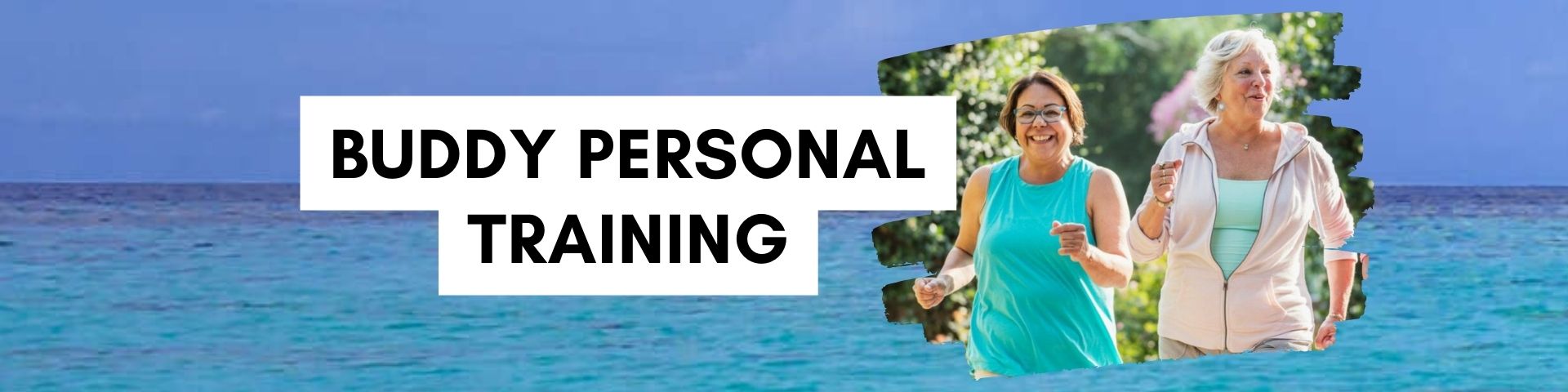 Exercising with a companion Isn't Just About Fitness
Working out together is the BESTEST thing to do as friends or partners! It strengthens your relationship and gives you a shared purpose to work towards. Here’s why it’s so cool: Quality Time While you are working out, you're (hopefully) not checking your phone or getting distracted; you're just hanging out, focused on one objective. And while deep conversations are great for strengthening a relationship, so is sharing a laugh. When you work out with a companion, you can be yourself and get fit simultaneously. Mutual Support Working out together gives you the opportunity to cheer each other on. There's something really special about going out of your comfort zone and having a loved one give a word of encouragement or a pat on the back. Plus, you get to celebrate each other’s wins, be it beating a 5k time or surviving a challenging yoga class without bursting into giggles! Explore Together It's an adventure to try new things with someone you love spending time with. It doesn't matter whether it's rock climbing or taking a walk in the park; doing these things with a friend makes them all the more memorable. Non-Verbal Bonding When you workout with another person, you start copying each other and moving at the same time. It's called non-verbal matching, and it actually makes you feel closer to one another. Plus, you have all those exercise-induced endorphins flowing around your bloodstream, making you feel bonded. Shared Goals It isn't just about bonding, of course; it's about pursuing a shared goal and getting healthier as a team. It's a great feeling - knowing that you are doing something good for your physical and mental well-being and it is a powerful motivator to know that YOU showing up means you're supporting your partner too, whether it's training for your first 5k, mastering a yoga pose, or sticking to a consistent workout routine. To sum all this up, exercising as a team isn't just about fitness; it's about nurturing your relationship, sharing laughter, offering support, and reaching your fitness goals together. Try a free buddy workout with me. Clara Depont CPT, CYT Want to get these articles straight to your inbox each week? Sign up here.  You know what? I secretly look forward to laundry day. It's a non-negotiable-automatic-activity, and I love it because there's no decisions involved; it's just a simple task that happens without fail every Thursday.
I've been pondering how to make exercise feel the same way - like something that is so routine, we don't have to be 'motivated' to do it; it just happens. To be honest, even though I am a personal trainer, I'm not the kind of woman who leaps out of bed at dawn all ready for a workout, or one of those fitness enthusiasts who lives and breathes the gym life. So, I HAD to figure out how to make workouts automatic for me too. This is what I came up with… Work out at the same times each week Here’s why:
Those of my clients, who work out with me at the same time each week, have accountability because it’s booked and paid for, but more than that, they have simply repeated the same habit until it’s become automatic. Those of us who don't have a personal trainer can create our own consistency. A good (habit stacking) strategy is to schedule workouts before or after another commitment, or at an hour that you HAVE to do them because there are no other suitable times. For example, if you're too tired to walk after work, then you HAVE to go in the morning. Then you HAVE to be finished in time to leave for work. Or you could walk to your weekly Spanish class so that you are stacking a new habit (walking) to an existing one (Spanish class). You can make exercise feel automatic by sticking to the same time every week until it simply becomes second nature. Clara Depont CPT, CYT Workout with me HERE Want to get weekly content like this straight to your inbox? Grab it HERE  Alternative Ways to Approach Weight LossWe all know that losing weight isn't just about ticking off a checklist of things we "should" do. It's way deeper than that. It's about truly feeling that we deserve to be well and not sabotaging ourselves - so we’re not fighting an uphill battle.
And thank goodness we've got people like Louise Hay to guide us. She was the ultimate self love guru, and her approach was so simple yet so powerful. She was all about self-love, self-acceptance, and building a positive mindset to have as your secret weapon in achieving whatever you want. Here are some of the concepts Louise Hay taught: Self-Love and Self-Acceptance The foundation of Louise’s philosophy is a big dose of self-love and self-acceptance. Once we love ourselves for who we are, we start to want the best for ourselves even while we are changing. Mindful Eating Louise believed in tuning into your body’s needs instead of dieting. Like savoring every bite, letting your body tell you when you're full, and truly enjoying your food. Mindful eating can help prevent overeating and promote a healthier relationship with food. She also advocated for consuming natural foods, rather than processed or chemically altered foods. Letting Go of Negative Emotions Louise Hay believed in releasing negative emotions, including guilt and shame, which often get tangled up with body image issues. Holding on to painful emotions can make us want to eat more to suppress or cope with the pain they cause. On the other hand, letting go of these emotions, makes space for self-acceptance and all the positive change that comes with it. Positive Affirmations Louise loved positive affirmations, and honestly, I find them to be like little pep talks that rewire my brain. They can work as gentle nudges to stick to your healthy habits. So, you're not just telling yourself you need to hit the gym; you're telling yourself, "I respect my body by doing workouts I enjoy." Law of Attraction This might sound a bit "woo-woo," so it's not for everyone. However, Louise taught that focusing on positive thoughts and emotions attracts positive experiences. For instance, visualizing your body in a state of health and vitality can help it manifest those qualities. In a Nutshell Louise Hay's approach is like a wellness cocktail of self-love, affirmations, mindfulness, and embracing the whole you. It's not just about shedding pounds; it's about shedding negativity and setting yourself up for a balanced and fulfilled life. Clara Depont CPT, CYT Want to get weekly content like this straight to your inbox? Grab it HERE  Do you find yourself setting the same unreachable goals over & over again? Setting the right goals can make all the difference. Just when I thought there were no new ways to approach goal setting, I came across "Burnout: The Secret To Unlocking The Stress Cycle" by Emily Nagoski, PhD, and Amelia Nagoski, DMA The book offers a new take that emphasizes avoiding burnout - which often seems to be our problem when it comes to not achieving all the things we want. Instead of boring old SMART goals, their framework involves setting goals that mean something to you - can be achieved soon - you are certain you can achieve - and that you feel good about. Use this method when you're feeling overwhelmed or burnt out - or if you want to avoid getting to that stage! PERSONAL "Why does this goal matter to you? How much does it matter? Tailor your goal so that it matters to you." Goals driven by the notion of "I should" or societal ideals like "women should look like…" are not inspiring! Focus on the difference it will make in your life instead. What are the outcomes that, once achieved, will make so much difference that it's worth the work? Whether it's self-confidence, setting an example for your kids, or living longer - a personal connection helps you commit. SOON "When will you know you’ve succeeded? Your goal should be achievable without requiring patience." What deadline feels realistic but not too far off? Is it 30 days? 7 days? This allows you to get some quick wins under your belt and experience positive changes sooner. A deadline months away may feel distant, abstract and thus unattainable. On the flip side, aiming for achievable milestones in the near future can give boost your motivation. CERTAIN "How confident are you that you can succeed? Your goal should be within your control." I’m always preaching this one! When we set unattainable goals, we fail and that knocks our confidence. Goals should be both personally achievable and feasible in terms of time and resources. While "everyone has a book in them," most of us lack the time and energy required to write the said book, even though we have the ability. Same goes for weight loss and fitness goals. POSITIVE "What improvement will you experience when you win? It should be something that feels good, not just something that avoids suffering." You might have heard of push and pull motivation. In the context of fitness, weight loss, and health, we often think about getting rid of fat or avoiding health issues (push factors). But there are so many exciting outcomes (pull factors) of becoming fitter, healthier, or losing weight. While push factors can motivate us, pull factors are more exciting. Reflect on the positive outcomes of your fitness journey: like more energy, better mood, and overall well-being. Actually, don’t just reflect on them, take a moment to visualize yourself as a new person - feeling amazing! CONCRETE & SPECIFIC Concrete: "How will you know you’ve succeeded? There is an external indication that you have succeeded." Specific: "As opposed to general. You should be able to visualize precisely what success will look like." A real trigger for burnout is not reaching the targets we set for ourselves. We may never feel good enough simply because we're not setting a clear target and acknowledging when we reach it. Instead of a goal to "get fit," aim to complete a certain number of steps, miles, or workouts by a specific date so you get to celebrate milestones or adjust the plan as necessary. Goal Example
Over to you: What goal would be meaningful to you? How is your goal meaningful to you? What timeline works for you? What are you certain you could achieve by this deadline? Can you picture the exact outcome? What are the positive outcomes? How will you measure your progress? Reframing goals-you-never-reach in this way, removes overwhelm and boosts confidence by giving you a quick win. Want to get weekly content like this straight to your inbox? Sign up HERE  No one wants more belly fat, an uncontrollable appetite and cardiovascular disease!
High fructose corn syrup makes us gain weight, store belly fat and even lead to a food addiction in some cases! Too much sugar isn’t great either, but getting off the HFCS roller coaster makes it easier to cut down on the purer forms of sugar. How HFCS Affects Hunger HFCS is such an intense form of sweetness that it actually desensitizes our brain and increases appetite. It’s like sugar on steroids. The hunger hormone leptin can no longer tell our body it’s had enough food so we can’t stop eating and gaining weight. The Negative Health Effects of HFCS HFCS is converted primarily into fat and triglycerides. People who consume HFCS have 200% higher levels of triglycerides than those who consume glucose and are likely to gain belly fat which puts them at risk of cardiovascular disease - not to mention insulin resistance. Why HFCS is Addictive? Our bodies aren’t designed for such intense sweetness so we get a dopamine boost when we consume it. Like all addictive substances (or behaviors) we need more and more, to get the high. Along with caffeine, it’s probably the reason so many people get addicted to soda. “Just like alcohol, the more HFCS you consume, the more likely you are to develop an addiction—a craving for more food, an inability to stop eating, a preoccupation with the next meal, and withdrawal symptoms when you stop.” By James Greenblatt, MD So there’s that! How to Give up HFCS Try going without HFCS and see if your mood drops, and if you find yourself turning to something else as a pick-me-up, like caffeine, fast food, or other types of sugar. If you need HFCS to help regulate emotions or energy, you may need to swap over to a more natural form of sugar first, and take it from there. HFCS is replacing sugar in processed foods, even ones that aren’t traditionally sweet, because it’s cheaper, more concentrated, and works as a preservative. So read your ingredient labels. It is also called maize syrup, glucose syrup, glucose-fructose syrup, tapioca, syrup fruit fructose, crystalline fructose, isoglucose. The High Fructose Corn Syrup roller coaster of uncontrollable hunger, fat gain and addictive behavior can easily be avoided by not buying food that contains HFCS and even swapping to ‘ordinary’ sugar. Want to get this blog in a weekly email? Sign up HERE Clara xx Reference  Giving Into Temptation?
It's time to talk about those sneaky short-term pleasures that mess up our weight loss and fitness goals. You know the ones - someone left donuts in the break room, going home to Netflix feels more appealing then hitting the gym or grabbing take out is more tempting than eating what’s in the fridge. These, in the moment, urges are like shiny objects leading us away from our long term goals. They make us feel good right now at the expense of reaching our long term goals. We know this, so why do we keep falling into this trap? In short, it's pesky negative thoughts and feelings that make us vulnerable to falling off track. Simple feelings like stress, boredom, or feeling down can trap us into doing things we know we shouldn't. But we do have the power to take control of these cravings. We can turn around negative thoughts like we do inside the Fit & Fabulous Weight Loss Bundle and we can choose to explore different practical solutions to in-the-moment-urges which I'll talk about here. Trust me, it's not easy but it's worth it. Have a healthy snack on hand to help you resist the donuts in the break room. Book a class or 1:1 session at the gym so you HAVE to go after work instead of straight home to Netflix. Or pre-prepare food you enjoy so you have something TASTY to look forward to when you get home. And do these things consistently. Once you’re willing, really willing, to acknowledge, what you're doing, you can more clearly associate daily actions with negative outcomes. And this can be a great motivator (if a little depressing)! How many cookies are you eating? How much of your diet is sugar or refined carbs? How will you feel in 10 years if you keep this up? With some serious commitment and self-love, you can kick those short-term pleasures to the curb and stride confidently towards your fitness and health goals!!! You got this! Make a plan to master cravings inside the Fit & Fabulous Weight Loss Bundle  If you're not currently exercising, it can feel intimidating to take the first step, especially if you’re being told repeatedly that you HAVE to join a gym to get fit.
Luckily you can get started in a simple, non intimidating way (without the gym). First 7 Days During week one, there's no need to change anything. You can simply observe where you're at so you can set a good goal at the end of the week. Count steps if you have a tracker or just make a note of movement and active hobbies like gardening, cleaning or taking the grandkids to the park. After 7 Days After 7 days it’s time to set a small goal. Choose an activity that would be REALLY easy to stick to for the next 30 days, whether it’s something you do daily or 3 times a week. The aim here is to create a small project you can FINISH so you can build up a habit and your confidence. Avoid going from zero to a hundred in the first week and getting burnt out or injured. Some people do really well with starting a daily habit like committing to 5 minutes of Pilates each day or a brisk 10-minute walk around your block every morning. Others prefer to commit to something like a weekly exercise class or classes. The Next 30 days Now that you are moving more, consume more protein so that your muscles can 'reform' after a workout to begin creating a gorgeous toned body! An ideal protein intake is 0.68 times your body weight in pounds. For example, if you weigh 180 lbs, aim for around 122 grams of protein per day. Moving more plus a higher protein intake, makes your body need more water. Water aids protein digestion, helps post-exercise soreness, and makes exercise easier by lubricating joints and regulating temperature and energy levels. Aim to drink at least half a gallon (64 fl oz) of water per day. After 30 days After the initial 30 days you’ll have transformed into someone who exercises! GO YOU! Now it’s time to keep up the momentum by choosing your next goal that excites you and takes into account how this month went. Summary of Steps
These steps aren't about making drastic changes or instantly transforming your whole body. They're designed to help you form a solid foundation of small wins to build confidence. If you want to get started by working out with me, grab a FREE WORKOUT.  Want Motivations to Exercise? Sometimes, finding motivation is as simple as asking yourself a few basic questions and choosing to act. Here are some of the main inside my free Get Motivated to Move workbook: #1: Why do you want to exercise? What is important to you in life, and how does exercise help you achieve your goals in these areas? #2: What's stopping you? What are your reasons for not working out, and what fears are holding you back? #3: What will you do about these obstacles? Are there ways to overcome your reasons and fears? What steps are you willing to take to finally get moving? ------ Want to go deeper with these questions? Download the short workbook HERE   I love this model because it cuts right to the heart of emotional overeating. I'm not saying it's easy to stop, but this strategy makes it easier to manage. Stage One: Feeling Pain This is the sucky part. We feel bad in some way, and we just want to stop feeling bad. Stage Two: Stopping Pain We eat or drink something that’s not good for us to get some relief from the aforementioned pain. Maybe we are aware of this, and we know that we are about to devour an entire sheet cake because we're pissed about something, or maybe we just do it subconsciously, and are always eating to avoid feeling uncomfortable. Stage Three: Feeling Better Now we're experiencing sweet relief. We’ve used food to give our self a break from the pain. Stage Four: Regret Once the sugar high or food coma wears off we are super aware that we've eaten too much or consumed something that doesn't agree with us, making us feel nauseous or bloated. Maybe we are berating ourselves. Now We're Back to Stage One: Pain and Discomfort Food may or may not have an addictive quality for you. Either way, eating to avoid emotional pain will probably be a really hard habit to break. Similar to associating a particular food with heartburn or bloating or a headache, you can learn - over time and with work - to associate the urge to overeat with temporary relief followed by regret. It's more black and white for someone in recovery who can associate one slip up with the downfall of their whole life. It's harder to work in these grey areas, but here is how to do it: How to Stop Emotional Eating
You've got this! If you want some support download the Free weight Loss Mindset Reset Audio Program or join me for the Fit & Fabulous Weight Loss Bundle. Clara xx |
Clara Depont is a certified personal trainer at www.claradepont.com where she helps women get toned, strong and flexible through effective and unique workouts When she’s not writing blogs on how to stay vibrant, fit and happy she’s traveling in search of a forest or a sexy coastline. You can get to know her best through Weekly Emails, Instagram or Facebook. She is British and lives in New Mexico.
Get These Posts Straight to Your Inbox in a Weekly Email
Archives
June 2024
Categories |
 RSS Feed